




The Hidden Risks of Rising Temperatures
As global temperatures continue to rise due to climate change, data centers are facing a multi-layered crisis that goes beyond environmental challenges, including the emergence of a complex new threat—“heat attacks.” These attacks target the critical cooling systems of data centers, potentially leading to server failures, catastrophic outages, data loss, and severe security vulnerabilities. This emerging danger underscores the urgent need for building more resilient infrastructure and robust security protocols. The explosive growth of artificial intelligence (AI) and cloud computing has only intensified this demand, leading to an unprecedented power scramble. Today’s data center operators are caught between the pressing need for sustainable, cost-effective operations and the uncompromising demand for absolute security and reliability. As the industry pushes the boundaries of efficiency and even looks to space for solutions, one basic principle remains true: sacrificing infrastructure security to save costs is a dangerous trade-off. Without security, true sustainability is not possible.
The Growing Heat and Power Challenges of Data Centers
Data centers are massive consumers of energy, requiring enormous amounts of power to run computing operations and prevent overheating through critical cooling systems. According to McKinsey, they account for about 1% of global electricity consumption, with some facilities consuming as much power as a medium-sized city. The booming growth of AI has dramatically increased this demand, creating severe power bottlenecks. The competition for megawatt-level electricity has become intense, with tech giants forced to directly invest in power generation, from upgrading hydroelectric plants to acquiring natural gas turbine manufacturers. For instance, Google spent $3 billion to retrofit two hydroelectric plants in Pennsylvania to secure power supplies, highlighting the scarcity of resources. Demand is so high that critical equipment orders, such as GE Vernova gas turbines, are backed up for years.

Google’s unique $3 billion hydropower contract will not be the last.
This power shortage, combined with heatwaves triggered by climate change, is placing extreme dual pressure on data centers. In the summer of 2023, record-high temperatures caused overheating and operational disruptions in data centers worldwide. The challenge is clear: operators must ensure sufficient energy supply, manage escalating cooling costs (which can account for 40% of total energy consumption), and fortify their facilities to withstand both physical and cyber-induced heat threats.
Why Data Center “Heat” is Rising: The Battle Between Efficiency and Reliability
The pursuit of energy efficiency is one of the primary reasons for rising operational temperatures. To reduce the enormous costs of cooling, many operators have adopted methods such as using external air or deliberately increasing server intake temperatures. While these measures save energy, they significantly reduce the safety margin for preventing overheating. Higher temperatures accelerate hardware degradation, increase the risk of server failures, and make the infrastructure more vulnerable to accidental heat events and malicious manipulation.
The Rise of “Heat Attacks” by Cybercriminals
This vulnerability has caught the attention of malicious actors. The concept of “heat attacks” has emerged, where hackers target data center environmental control systems. By infiltrating building management systems (BMS) or industrial control systems (ICS), they can intentionally shut down cooling functions, manipulate temperatures, and trigger hardware failures. Such disruptions can lead to large-scale service outages and serve as a smokescreen for data theft.
Notable Cases of Heat-related Cyberattacks:
- 2018 Atlanta Data Center Attack: Attackers infiltrated the system, causing cooling failures and raising temperatures above 100°F (37.8°C), damaging critical infrastructure and interrupting city services.
- 2019 Iran Attack: Using a sophisticated “Stuxnet-like” malware, the attackers targeted cooling and power systems, causing overheating and operational chaos.
- 2022 Singapore Attack: A security vulnerability led to a major data center cooling system failure, causing server overheating and interrupting government and financial services.
The Frontiers of the Future: Space Solutions and Their Costs
In search of reliable, sustainable power and innovative cooling methods, the industry is looking to the stars. Companies like Google, Microsoft, Amazon, and SpaceX are exploring the possibility of establishing data centers in space. The proposed benefits are revolutionary: solar power efficiency up to eight times that of Earth, near-limitless energy, and the ability to use the vacuum of space for radiation cooling, significantly reducing reliance on traditional cooling systems.

However, the costs are astronomical. Current estimates suggest that building a 1 MW data center in space, including launch costs, could reach about $35.5 million. Scaling this to 1 GW (a typical size for large terrestrial centers) could theoretically approach $35.5 billion. While this is a long-term vision, it highlights the extreme investments and massive costs the industry is considering to solve its energy and heat management dilemmas.
A Balanced Approach: Integrating Security, Sustainability, and Resilience
Data center operators must find a balance between energy efficiency, security, and cooling reliability in this complex triangle. Measures that compromise heat management to save costs introduce unacceptable risks in the age of heat attacks. A comprehensive strategy is needed:
- Advanced Cooling Technologies: Invest in resilient systems like liquid cooling (direct-to-chip, immersion), which provide higher efficiency and better thermal control compared to air cooling.
- Physical System Cybersecurity: Implement stringent security measures for BMS, ICS, and power infrastructure, treating them as equally important as IT network security.
- Predictive Maintenance and AI: Deploy AI-driven monitoring systems to predict cooling system failures and detect abnormal temperature fluctuations that may signal an attack.
- Redundancy and Resilience Design: Design comprehensive redundancy for cooling and power systems to withstand component failures and malicious attacks.
- Diversified Energy Strategy: Pursue on-site generation (fuel cells, renewable energy) and innovative partnerships to ensure power stability, avoiding sole reliance on overstretched power grids.
Conclusion: Never Compromise Security for Cost Savings
The threat landscape for data centers has evolved to encompass both the environment they operate in and the criminals attempting to weaponize it. “Heat attacks” represent a tangible and real danger, combining cyber threats with physical vulnerabilities. While sustainability and cost-efficiency are critical, they must never come at the expense of foundational security. The bold exploration of space only underscores how crucial the limitations faced on Earth are. To ensure long-term operational integrity, cooling, power management, and cybersecurity must be designed as an integrated, resilient whole. In the endless pursuit of megawatt power and efficiency, security is not an option—it is the cornerstone of all sustainable operations.
Gottogpower: Your Reliable Ground-based Energy Solutions Partner
In the face of growing “heat attacks” and power infrastructure bottlenecks, the future is undoubtedly exciting, but what data center operators need now are solutions that are deployable today and reliably secure. This is where Gottogpower’s value lies.
We understand that data center security and sustainability begin with stable, clean, and self-controlled energy. When power grids are overwhelmed and gas turbines are in short supply, over-reliance on a single external energy source has become one of the biggest operational risks.
Gottogpower offers next-generation distributed energy solutions:
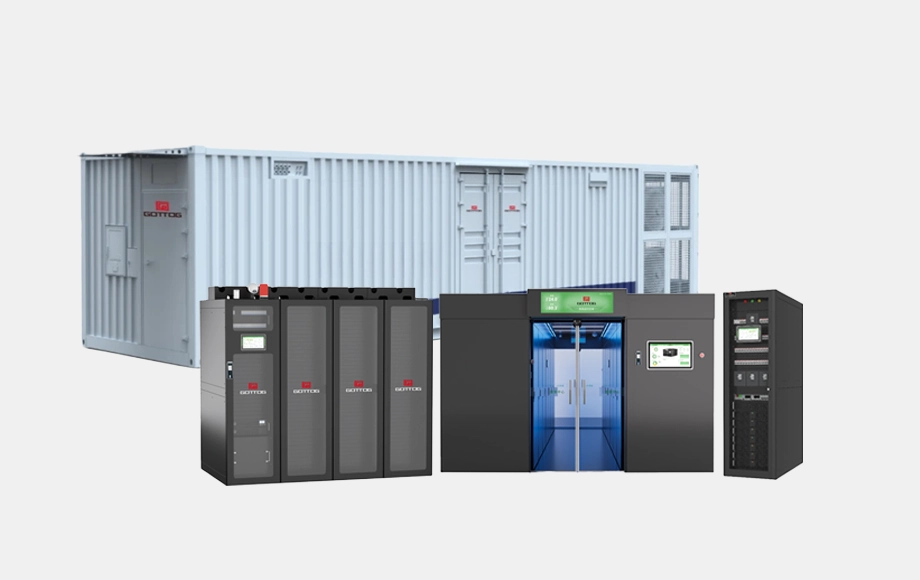
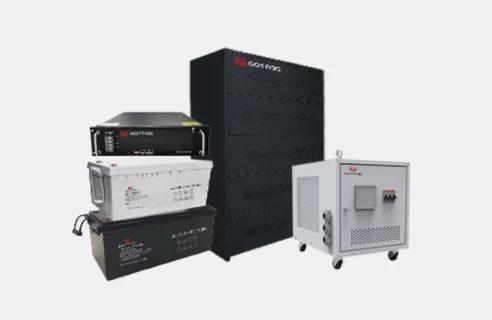
- Addressing “Heat Attacks” and Grid Instability: Our battery-powered generation systems and high-power-density energy storage solutions act as critical backup power and load-balancing units for data centers. Even when the main grid or cooling systems are disrupted by extreme weather or cyberattacks, our systems seamlessly take over to ensure continuous power and temperature control, providing a crucial “breathing window” to prevent overheating and data loss caused by power outages.
- Breaking the Power Access Dilemma: We offer modular on-site generation solutions, from consulting and design to deployment. Whether supplementing peak-shaving power or serving as the core energy unit for off-grid/microgrid systems, Gottogpower helps you quickly boost your energy capacity, bypassing long grid application processes and the delivery bottlenecks of traditional power generation equipment, ensuring that your data center expansion plans are not limited by external power supply constraints.
- Practicing True Sustainability: Our solutions aim for zero-carbon emissions during power generation. This aligns with the direction of tech giants investing in hydropower and exploring space-based solar energy but is more feasible for implementation today. In addition to enhancing energy resilience, our solutions effectively reduce your carbon footprint.
From defending against cyber “heat attacks” to building self-sufficient energy fortresses, Gottogpower is dedicated to putting data center energy security and operational sustainability directly in your hands.
Security is the cornerstone of sustainability, and reliable energy is the foundation of security. Choose Gottogpower to lay an unshakable foundation for your data center.
Tell us about your project needs in the form below, and our team will provide a tailored power solution to support your data center’s safety, resilience, and sustainable growth.