



As digital transformation accelerates and AI-driven workloads continue to surge, power infrastructure is no longer just about reliability—it is about adaptability. The concept of scalable power solutions has emerged as a foundational strategy for data centers, telecommunications networks, and industrial environments that must evolve alongside dynamic power demands.
This article provides a comprehensive, high-density exploration of scalable power solutions, covering their definition, architectural principles, application scenarios, and future development trends, with a strong focus on practical value and real-world implementation.
What Are Scalable Power Solutions
Scalable power solutions refer to power system architectures designed to expand capacity seamlessly in response to increasing load demands, without compromising system stability, efficiency, or operational continuity. Unlike traditional power systems that are sized for peak load at the initial stage, scalable solutions follow a “grow-as-you-go” approach, allowing infrastructure to evolve incrementally.
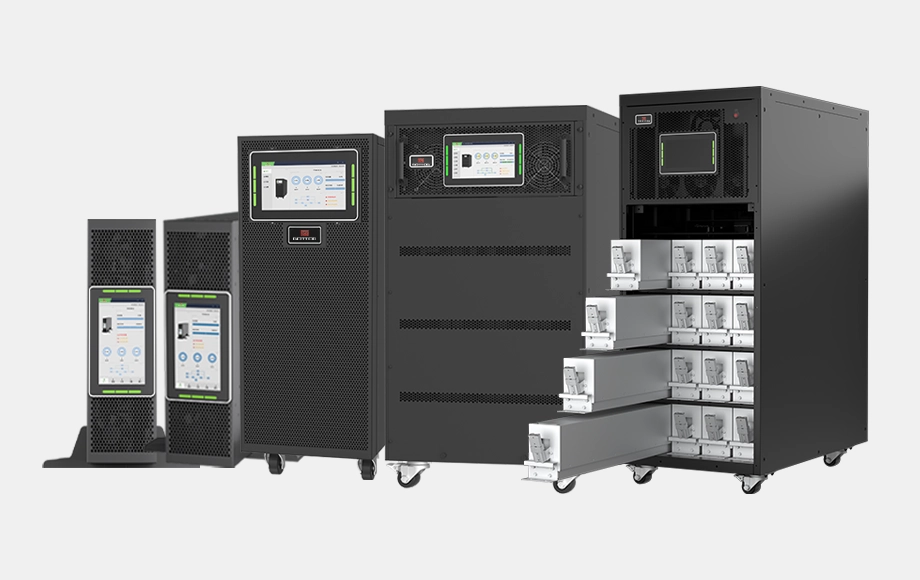
From an engineering perspective, scalability is achieved through modular design. Power systems are built using standardized components—such as modular UPS units, battery cabinets, and intelligent distribution systems—that can be added or reconfigured as needed. This approach minimizes upfront capital expenditure while reducing the risks associated with inaccurate capacity forecasting.
Why Scalable Power Solutions Are Becoming Essential
The rapid growth of high-density computing, particularly in AI and hyperscale data centers, has dramatically increased power consumption per rack. Where traditional racks consumed 3–5kW, modern AI workloads can exceed 20kW or even higher. This shift requires power systems that can adapt quickly to changing load profiles without requiring major redesigns.
At the same time, enterprise investment strategies are shifting away from large, upfront capital expenditures toward more flexible, phased investments. Scalable power solutions align perfectly with this model by enabling incremental deployment. Additionally, rising energy costs and stricter sustainability requirements are pushing organizations to adopt more efficient systems that can operate optimally across varying load conditions.
Core Architecture of Scalable Power Solutions
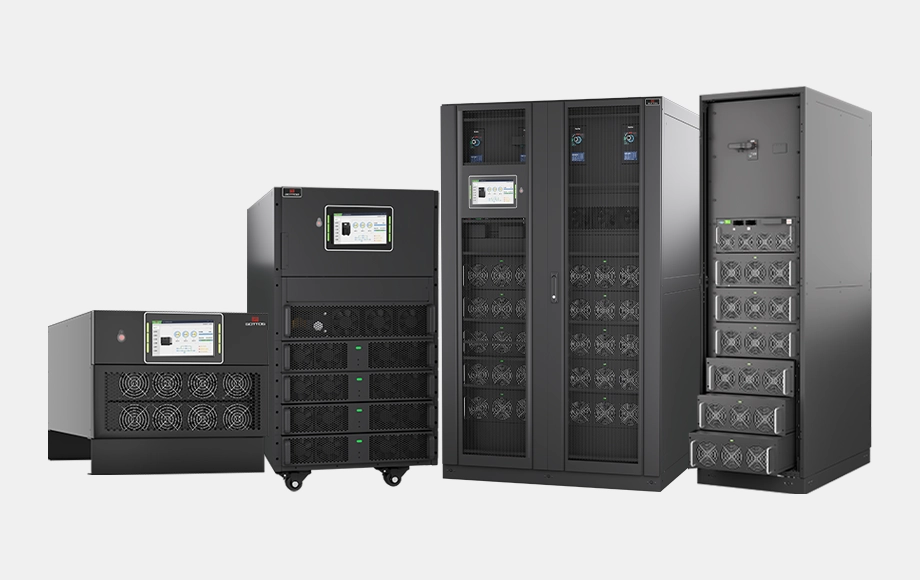
A scalable power system is not defined by a single component, but by the integration of multiple subsystems working in harmony. At the center of this architecture is the modular UPS system, which provides uninterrupted power and allows capacity expansion through hot-swappable power modules. This ensures that additional capacity can be deployed without downtime.
Supporting the UPS is the intelligent power distribution system, which delivers electricity to IT loads with precision and visibility. Advanced monitoring capabilities enable real-time tracking of power usage, helping operators optimize load balancing and improve energy efficiency.
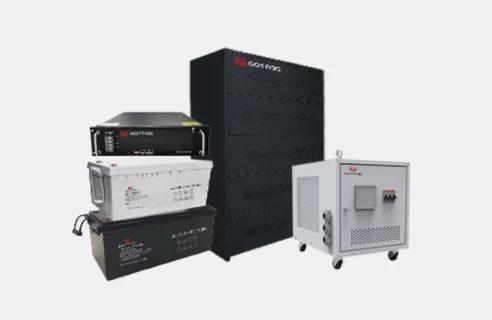
Energy storage systems play a critical role by providing backup power during outages. Lithium-ion batteries are increasingly replacing traditional lead-acid batteries due to their higher energy density, longer lifespan, and reduced maintenance requirements. In larger installations, generators serve as an additional layer of redundancy, ensuring long-duration power continuity.
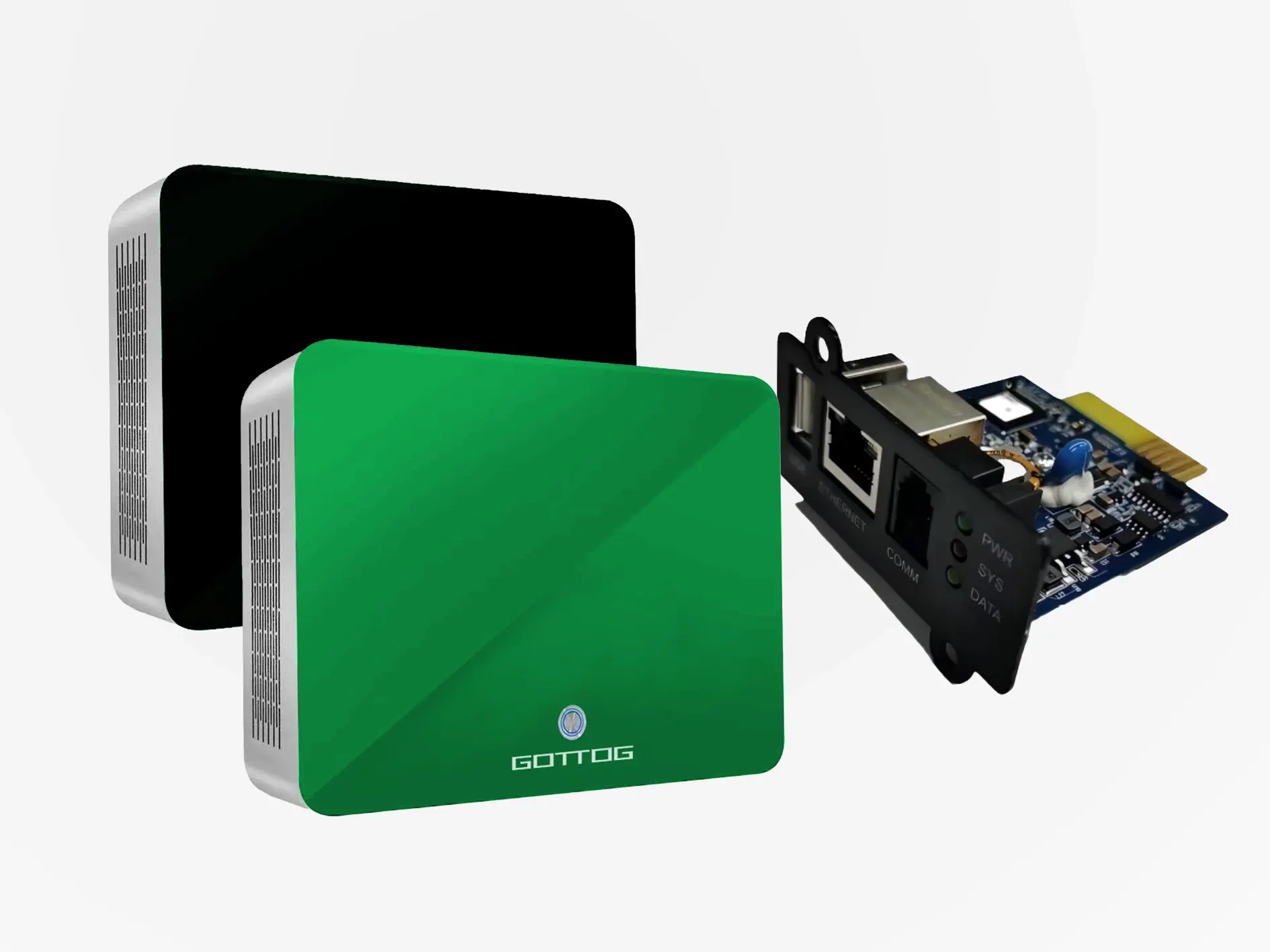
At a higher level, energy management platforms such as DCIM or EMS integrate all components into a unified system, enabling data-driven decision-making, predictive maintenance, and capacity planning.
Key Deployment Models
Scalable power solutions can be implemented through different architectural models depending on the application scenario. Centralized architectures are commonly used in large-scale data centers, where high-capacity UPS systems provide unified power distribution. While efficient in terms of management, these systems may lack flexibility when it comes to rapid expansion.
Distributed architectures, on the other hand, are designed for flexibility. Power infrastructure is deployed at the module or rack level, allowing independent scaling of each unit. This approach is particularly effective in micro data centers and edge computing environments, where agility and fault isolation are critical.
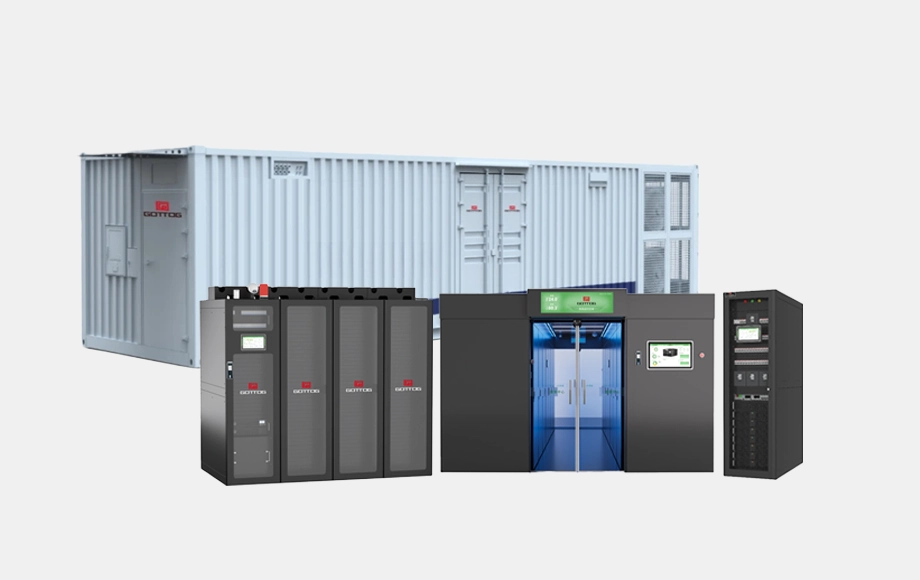
Prefabricated and containerized power modules represent another important trend. These solutions integrate UPS, batteries, and distribution systems into factory-built units that can be rapidly deployed on-site. This not only reduces installation time but also ensures consistent quality and performance through standardized manufacturing processes.
Application Scenarios
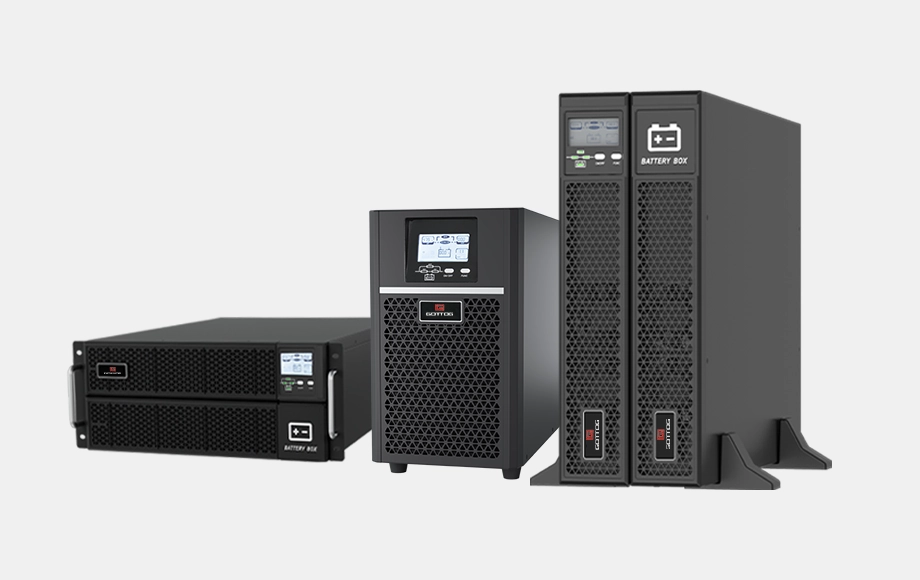
Scalable power solutions are widely used across multiple industries, with data centers being the most prominent example. In these environments, unpredictable growth in IT load makes scalability a necessity rather than a luxury. Modular UPS systems and micro data center architectures enable operators to expand capacity in line with business growth.
In edge computing, where infrastructure is distributed across numerous locations, scalable power systems provide compact, reliable, and easily deployable solutions. These systems often operate in unmanned environments, making remote monitoring and management essential.
The telecommunications sector also benefits significantly from scalable power solutions, especially with the expansion of 5G networks. As base stations become more power-intensive, operators require flexible systems that can adapt to evolving capacity requirements.
In industrial applications, scalable power infrastructure supports automated production lines and smart manufacturing systems, where consistent and high-quality power is critical to maintaining operational efficiency.
Technology Trends Shaping the Future
The evolution of scalable power solutions is being driven by several key technological trends. One of the most important is the continuous improvement in UPS efficiency, with modern systems achieving efficiency levels above 97% under optimal conditions. This significantly reduces operational costs over the system’s lifetime.
Battery technology is also advancing rapidly, with lithium-ion solutions becoming the standard for new deployments. These batteries offer longer service life, smaller footprint, and better performance compared to traditional alternatives.
Another major trend is the integration of artificial intelligence into energy management systems. AI-driven platforms can analyze historical and real-time data to predict load growth, optimize energy usage, and identify potential failures before they occur.
Additionally, the increasing adoption of liquid cooling in high-density data centers is driving closer integration between power and cooling systems. Coordinated design of these subsystems is essential for achieving optimal energy efficiency and supporting next-generation workloads.
How to Choose the Right Scalable Power Solution
Selecting the right scalable power solution requires a long-term perspective rather than a focus on immediate capacity needs. One of the key considerations is scalability granularity, which determines how much capacity can be added in each expansion step. Finer granularity allows for more precise alignment between investment and demand.
Another critical factor is whether the system supports online expansion. The ability to add capacity without shutting down operations is essential for mission-critical environments. Redundancy design must also be carefully evaluated, as it directly impacts system reliability and uptime.
Efficiency across different load levels is equally important, as power systems rarely operate at full capacity. Solutions that maintain high efficiency under partial loads can significantly reduce energy costs over time. Finally, compatibility with existing infrastructure and integration with management platforms should be considered to ensure seamless operation and future scalability.
Conclusion
Scalable power solutions have become a fundamental element of modern power infrastructure, particularly in data-driven industries where growth is unpredictable and continuous. By combining modular design, intelligent management, and high-efficiency technologies, these solutions provide a flexible and future-proof approach to power system design.
For organizations planning new deployments or upgrading existing facilities, prioritizing scalability is not just a technical decision—it is a strategic investment in long-term operational resilience and cost efficiency. As power demands continue to evolve, scalable power solutions will play an increasingly critical role in enabling sustainable and efficient growth.
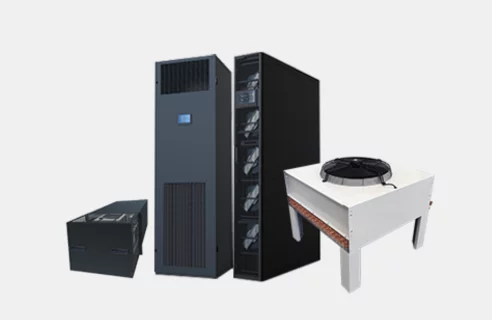
If you are looking to implement a reliable and future-ready scalable power infrastructure, GOTTOGPOWER offers comprehensive solutions including modular UPS systems, precision cooling, and integrated data center designs tailored to your project needs. Contact the GOTTOGPOWER team today to explore how you can build a power system that grows with your business.