



Table of Contents
The rapid expansion of artificial intelligence has fundamentally changed how data centers are designed and operated. AI computing centers, especially those supporting large-scale model training and high-performance inference, place far greater demands on power and distribution systems than traditional enterprise or cloud data centers.
As computing density increases and workloads become more dynamic, the power infrastructure is no longer a background utility. It has become a core architectural component that directly affects availability, scalability, and operating costs. Understanding these new requirements is essential for building AI-ready data centers.
Higher Power Density and Rack-Level Load Growth
AI servers consume significantly more power per rack than conventional IT equipment. GPU-accelerated clusters, high-bandwidth memory, and advanced networking hardware push rack power densities well beyond traditional design assumptions.
This shift requires power distribution systems that can support high-capacity loads at the rack and row level without compromising stability. Power paths must be designed to handle continuous high current while maintaining voltage stability and low loss. Traditional oversized centralized systems often struggle to adapt efficiently to these conditions.
As a result, data center operators are increasingly rethinking how power is delivered from the utility entrance down to the server rack.
Dynamic and Unpredictable Load Profiles
Unlike conventional workloads, AI computing loads fluctuate rapidly. Training jobs can scale up or down in minutes, causing sudden changes in power demand. This dynamic behavior places stress on power infrastructure that was designed for steady, predictable loads.
Modern power systems must respond quickly to load variations without introducing voltage dips, frequency instability, or excessive thermal stress. This has increased the importance of advanced power electronics, real-time monitoring, and fast-response uninterruptible power supply systems.
UPS solutions designed for AI environments must support rapid load changes while maintaining high efficiency across a wide operating range.
Scalability as a Core Design Requirement
data centers de IA are rarely built at full capacity from day one. Most facilities expand in phases, adding compute capacity as demand grows. Power distribution systems must support this incremental growth without major redesign or downtime.
This requirement is driving adoption of modular power architectures that allow capacity to be added as needed. Instead of deploying large monolithic systems upfront, operators can align capital expenditure with actual computing demand.
Scalable power design not only reduces initial investment but also minimizes stranded capacity and improves long-term total cost of ownership.
Higher Availability and Fault Tolerance Expectations
AI computing workloads are often mission-critical and extremely expensive to interrupt. A power event that halts training or inference can result in significant financial loss and operational disruption.
As a result, AI data centers demand higher levels of redundancy and fault tolerance. Power distribution architectures must support N+1 or N+X redundancy, seamless maintenance, and fast fault isolation.
Uninterruptible power supply systems play a central role in maintaining continuous operation, protecting sensitive computing equipment from power disturbances and outages.
Energy Efficiency and Thermal Impact of Power Systems
Power consumption and heat generation are tightly linked in AI data centers. Inefficient power systems not only waste energy but also increase cooling demand, compounding operational costs.
High-efficiency power conversion, reduced electrical losses, and optimized load matching are essential to controlling overall energy use. Modern UPS systems with high efficiency at partial loads are particularly valuable in AI environments where utilization can vary significantly.
Improving power efficiency directly supports lower PUE targets and more sustainable data center operations.
Integration with Advanced Cooling Architectures
Many AI computing centers are adopting liquid cooling or immersion cooling to manage high thermal loads. These cooling systems introduce new power dependencies that must be considered at the electrical design stage.
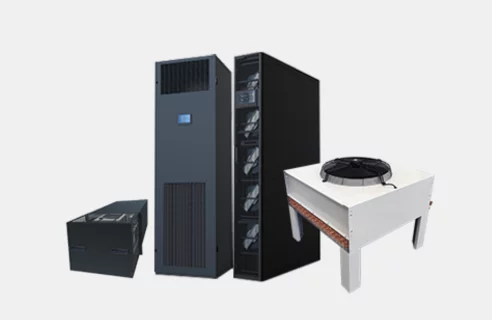
Power distribution must support pumps, control systems, and monitoring devices that are critical to cooling reliability. Coordination between power architecture and cooling infrastructure is essential to ensure system stability under all operating conditions.
A tightly integrated approach to power and cooling design is becoming a defining characteristic of modern AI data centers.
Modular UPS as a Key Enabler for AI Power Infrastructure
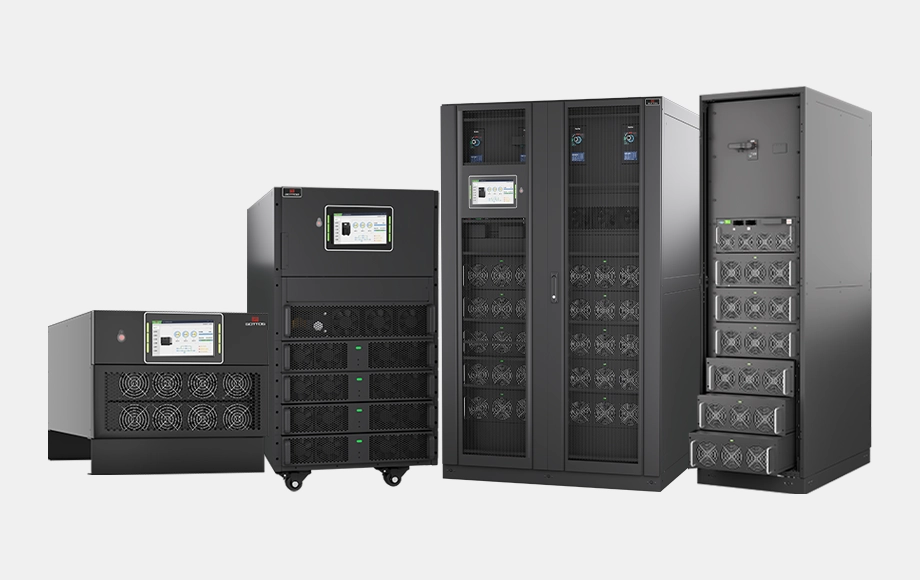
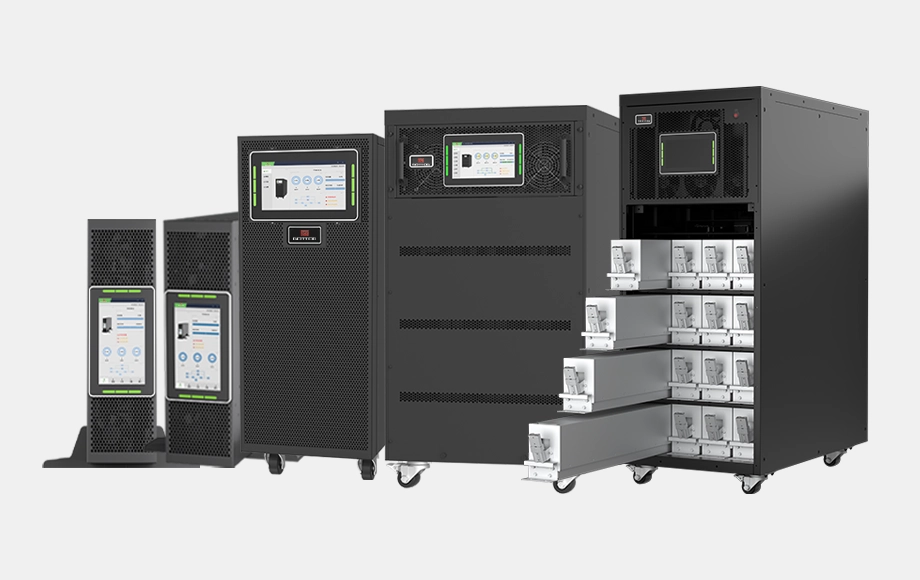
To meet these evolving requirements, UPS modular systems are increasingly recognized as a strategic solution for AI computing centers. Modular architectures support scalable capacity, high efficiency, fast deployment, and flexible redundancy configurations.
By aligning power capacity with actual load growth, modular UPS solutions help data centers remain agile while maintaining high availability. They also simplify maintenance and reduce operational risk in environments where uptime is critical.
For AI-driven facilities, modular UPS is no longer just an option. It is becoming a foundational component of next-generation power architecture.
Conclusion: Power Infrastructure Defines AI Data Center Readiness
AI computing is redefining what data center power systems must deliver. Higher density, dynamic loads, phased expansion, and strict availability requirements demand a more flexible and resilient approach to power distribution.
Designing AI-ready data centers starts with rethinking the power architecture. Scalable, efficient, and intelligent power systems are essential to supporting the next wave of AI innovation.
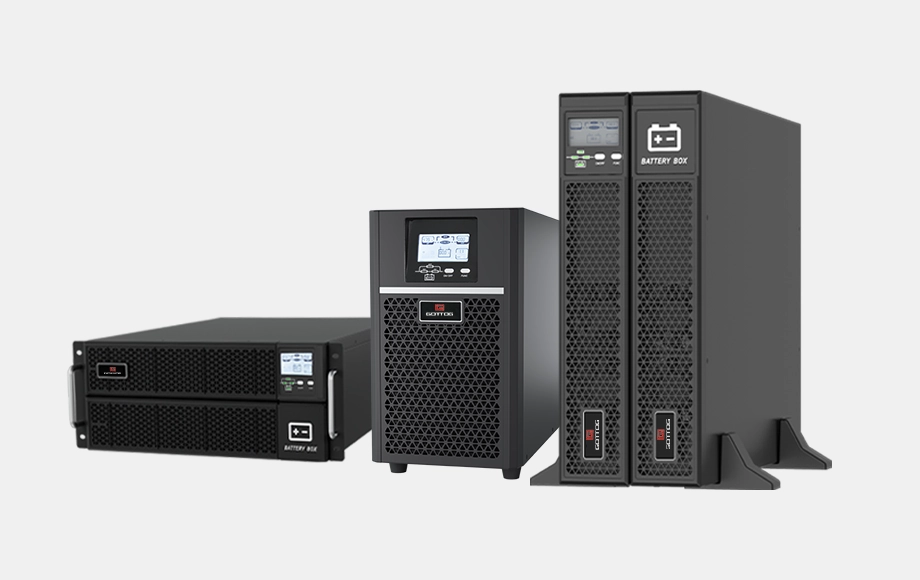
Gottogpower provides modular UPS systems and integrated power solutions designed for modern AI data centers. Our solutions support scalable deployment, high efficiency, and reliable operation under demanding computing loads.
Contact us to explore how a future-ready UPS architecture can support your AI infrastructure.