



Why Power Has Become a Bottleneck for AI Data Centers
The rapid growth of artificial intelligence is fundamentally reshaping data center infrastructure. AI data centers, particularly those handling large-scale model training and high-performance inference, demand unprecedented levels of power density, flexibility, and reliability. Unlike traditional enterprise or cloud data centers, AI workloads are highly dynamic and less tolerant of power instability. To illustrate the global scale of AI and high-performance data center deployment, the map below shows the locations of the world’s top 50 data centers, highlighting why power has become a critical bottleneck in modern AI infrastructure.

As AI clusters expand, power architecture is no longer just a supporting system—it has become a critical design constraint. In this context, modular UPS systems are increasingly recognized as a key enabler for scalable, reliable, and energy-efficient AI data centers.
Unique Power Challenges in AI Data Centers
AI data centers differ from conventional facilities in several important ways, each of which introduces new challenges for power infrastructure.
First, rack power density has increased dramatically. GPU- and accelerator-based servers often consume several times more power than traditional CPU-based systems, with single racks exceeding 30 kW, 60 kW, or even higher. This level of density places extreme stress on upstream power distribution and backup systems.
Second, AI workloads are highly dynamic. Training and inference tasks can cause rapid load fluctuations, requiring power systems that can respond instantly without voltage instability or efficiency loss. Traditional centralized UPS systems often struggle to maintain high efficiency under partial or variable loads.
Third, availability requirements are higher than ever. AI workloads are expensive to interrupt—both in terms of lost computation time and operational cost. Even short power disturbances can disrupt training cycles, corrupt data, or impact service-level agreements.
Finally, energy efficiency has become a strategic concern. AI data centers consume enormous amounts of electricity, making power losses and cooling overhead increasingly visible at the operational and financial levels.
Why Traditional UPS Architectures Are No Longer Enough
Conventional monolithic UPS systems were originally designed to support stable, predictable loads. However, modern AI data centers demand high-density, dynamic computing power, and traditional UPS architectures often lack the flexibility needed to keep up.
To prepare for future growth, many operators oversize their UPS systems. While this ensures capacity, it also leads to lower power efficiency, higher energy losses, and increased cooling requirements during early phases of deployment. In addition, traditional UPS maintenance often requires scheduled downtime or complex bypass procedures, which conflicts with the always-on nature of AI workloads.
As AI data center power demand continues to grow rapidly, scalable and adaptable solutions become critical. The image below illustrates that U.S. data center power requirements are projected to increase by approximately 10% annually through 2030. This highlights why modern modular UPS systems are becoming essential, providing the flexibility, efficiency, and reliability that AI data centers need to scale effectively.

The Role of Modular UPS in AI Data Centers
UPS وحدات systems address these challenges through a fundamentally different design philosophy.
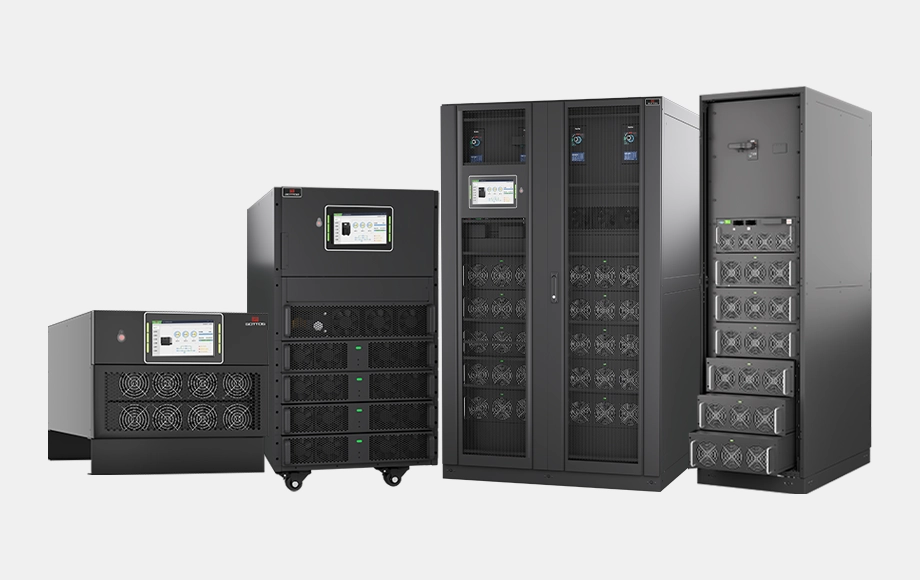
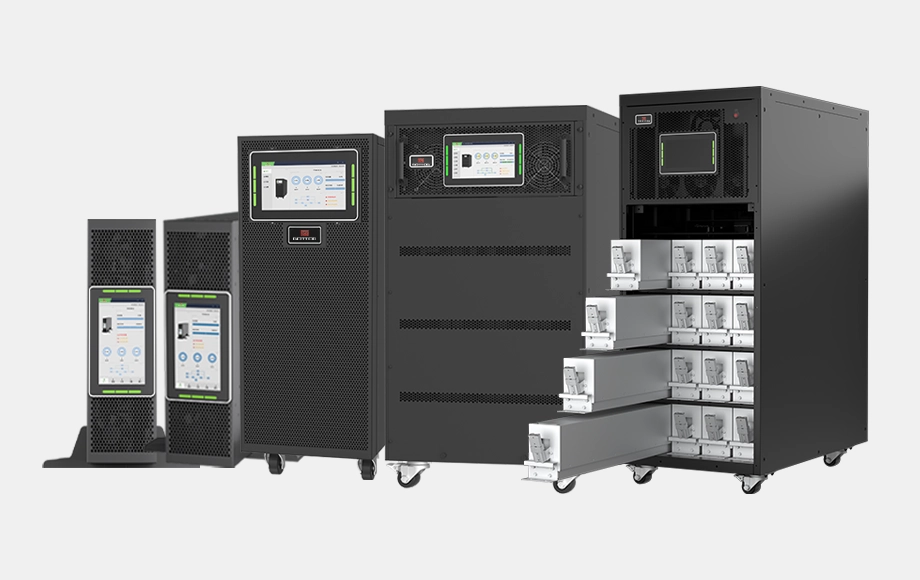
Instead of relying on a single large power block, modular UPS architectures are built from multiple hot-swappable power modules operating in parallel. Capacity can be added incrementally as AI compute demand grows, allowing power infrastructure to scale in step with actual requirements.
This approach significantly improves efficiency. Modular UPS systems maintain high operating efficiency across a wide load range by matching active modules to real-time demand. For AI data centers with fluctuating workloads, this translates directly into lower electrical losses and reduced cooling requirements.
Reliability is also enhanced. If a single module fails, the remaining modules continue to support the load, eliminating single points of failure. Maintenance can be performed at the module level without shutting down the entire system, which is critical for AI environments with continuous operation.
Supporting High-Density and Future AI Expansion
As AI hardware continues to evolve, power requirements will only increase. Modular UPS systems provide the flexibility needed to support higher rack densities, new accelerator technologies, and evolving deployment models.
For operators planning gradual expansion, modular UPS enables a pay-as-you-grow strategy. Initial investment is reduced, while long-term scalability is preserved. This is particularly valuable for AI data centers where demand forecasts can change rapidly due to new models, customers, or regulatory factors.
In addition, modular architectures integrate more easily with modern power distribution systems, intelligent monitoring platforms, and energy management strategies, supporting smarter and more resilient data center design.
Efficiency, Sustainability, and Operational Control
Energy efficiency is no longer just a technical metric—it directly impacts operating costs and sustainability goals. High-efficiency modular UPS systems help AI data centers improve overall Power Usage Effectiveness (PUE) by reducing conversion losses and cooling demand.
Advanced modular UPS platforms also support intelligent monitoring, enabling real-time visibility into load conditions, module health, and energy performance. This data-driven approach aligns well with AI-driven operations and predictive maintenance strategies.
Conclusion: Modular UPS as a Strategic Power Foundation for AI Data Centers
AI data centers are redefining what power infrastructure must deliver. High density, dynamic loads, strict availability requirements, and rising energy costs demand a more flexible and efficient approach to power protection.
Modular UPS systems are no longer just an alternative to traditional designs—they are becoming a foundational component of AI-ready data center architecture. By enabling scalable capacity, high efficiency, and resilient operation, modular UPS solutions play a critical role in supporting the next generation of AI computing.
Contact us today to learn how Gottogpower modular UPS solutions can optimize your AI data center’s power infrastructure and ensure uninterrupted performance.