



Data centers today are at the core of digital transformation, supporting cloud computing, artificial intelligence, and enterprise services. However, these critical infrastructures face increasing risks from severe weather, including heatwaves, thunderstorms, hurricanes, floods, snow, and ice storms. Without proper planning, these events can disrupt operations, damage equipment, and cause prolonged downtime. Preparing for these events is not optional—it is essential to ensure the continuity, reliability, and safety of data center operations.
Understanding Severe Weather Risks
Each geographical region faces unique weather risks that can impact a data center differently. Thunderstorms can generate lightning strikes and electrical surges that damage sensitive servers and networking equipment. Snow and ice storms, while cold in nature, can impair battery performance in UPS systems modules, freeze water lines, and prevent staff from accessing the site to perform essential maintenance. Flooding from heavy rainfall or hurricanes can physically damage server racks, cabling, and electrical infrastructure, while wildfires in dry regions can introduce smoke and particulate matter that contaminates critical systems. Tornadoes and hurricanes bring high wind loads capable of compromising buildings, power lines, and outdoor cooling units.
The consequences of these weather events are not limited to physical damage. Power outages, network disruptions, and cooling system failures can cascade, causing overheating, data corruption, or even permanent hardware damage. Preparing for these events requires a comprehensive approach that combines resilient power systems, advanced cooling, and operational readiness.

The Role of Modular UPS Systems in Weather Resilience
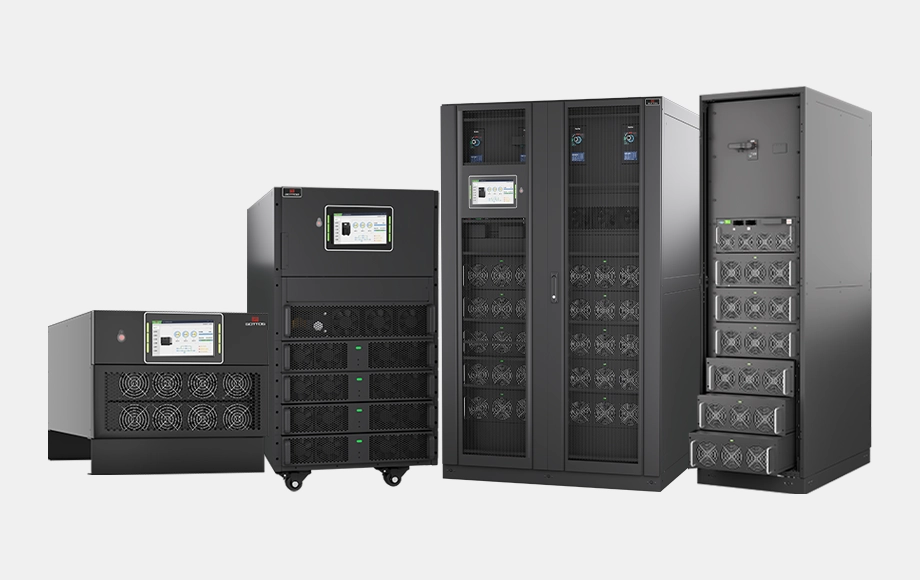
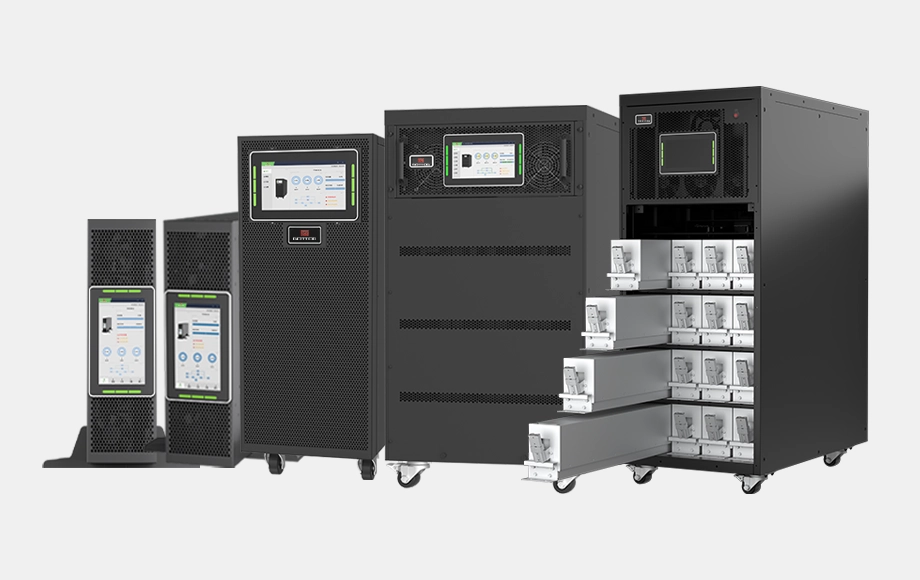
Power continuity is central to mitigating the effects of severe weather. Modular UPS systems are designed to provide scalable, high-efficiency backup power. Unlike traditional monolithic UPS systems, modular UPS solutions allow operators to incrementally expand capacity as load requirements grow, ensuring that the UPS operates at optimal efficiency under variable loads.
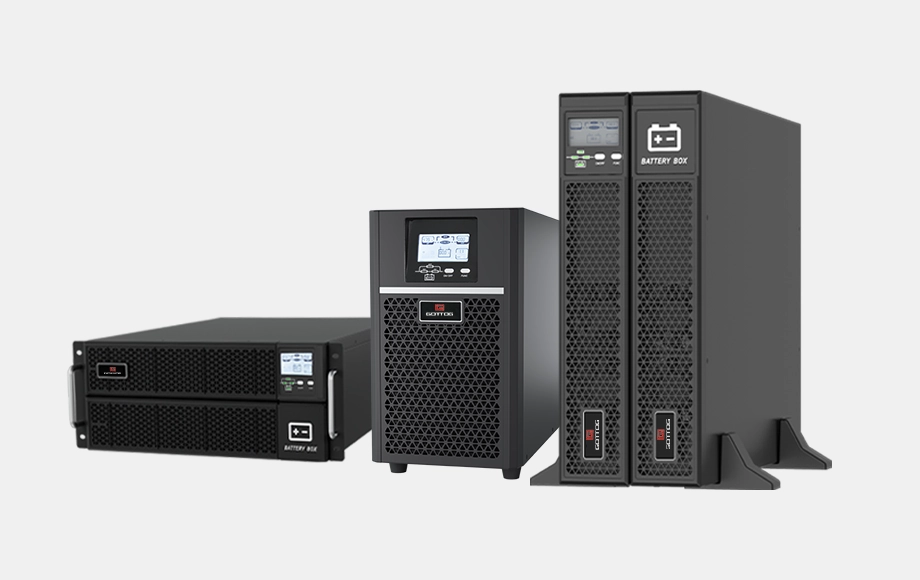
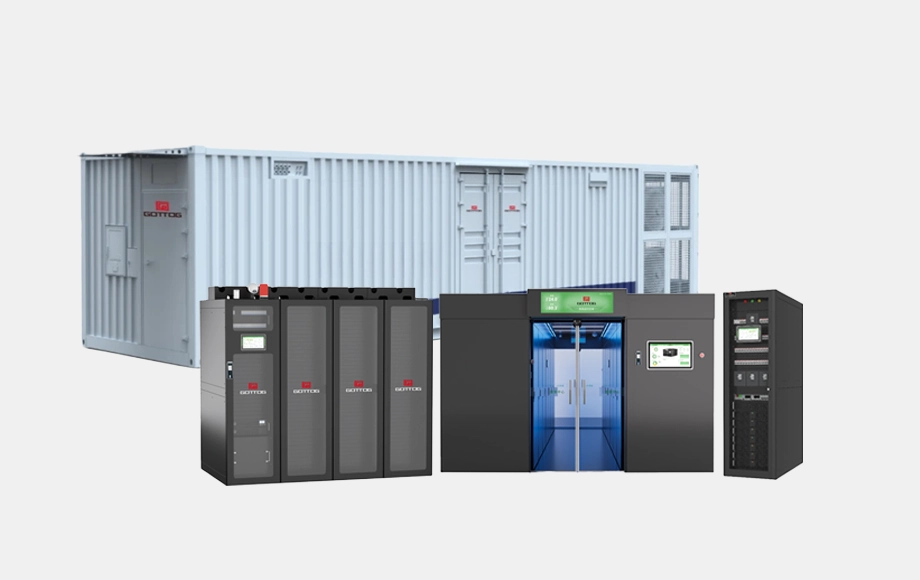
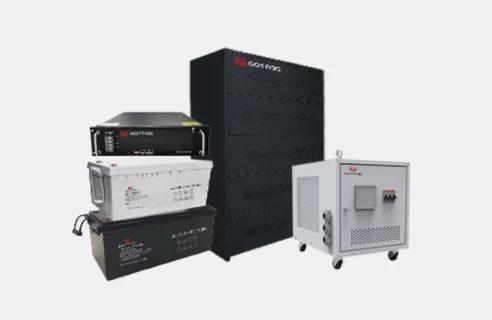
Rack mount UPS and UPS battery backup rack mount systems provide compact, space-saving solutions ideal for high-density server deployments. High efficiency modular UPS units and industrial UPS systems equipped with online double conversion UPS technology deliver clean, uninterrupted power for sensitive IT equipment. Three-phase UPS systems, including 3-phase modular uninterruptible power supply units, enable reliable power distribution for large-scale data centers, supporting both standard and high-power server racks.
Integrating these UPS systems into a modular design ensures redundancy, allowing for online maintenance without impacting operations. In the event of grid power failures, the UPS can seamlessly switch to battery power, maintaining continuous operation of servers, network equipment, cooling systems, and security devices. This is particularly important for liquid cooled data centers or immersion cooling data centers, where precise temperature and humidity control is essential to prevent overheating of high-density equipment.
Advanced Cooling Solutions for Extreme Weather
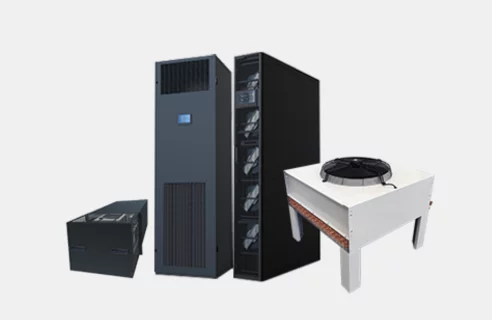
Extreme weather conditions not only impact power availability but also stress cooling systems. Traditional air-cooled systems may struggle to maintain safe operating temperatures during heatwaves or high computational loads. Liquid cooled data center racks, water cooled server racks, and immersion cooling data centers provide precise thermal management, reducing the risk of hotspots and hardware failures.
By combining modular UPS monitoring with cooling infrastructure, operators can implement predictive management strategies. For example, UPS load data can inform cooling intensity, allowing for dynamic adjustment of chilled water loops or airflow patterns. Immersion cooled data centers can take this further, with servers immersed in thermally conductive fluids that remove heat more efficiently than air alone, ensuring uninterrupted operation even when external temperatures are extreme.
Redundancy and Operational Preparedness
Resilience is built not only through hardware but also through operational procedures. Data centers should conduct comprehensive risk assessments, identifying potential vulnerabilities from floods, winds, or snow accumulation. Emergency plans should include backup power strategies with multiple layers of UPS and generator redundancy, regular testing of UPS units, and clearly defined staff responsibilities during emergencies.
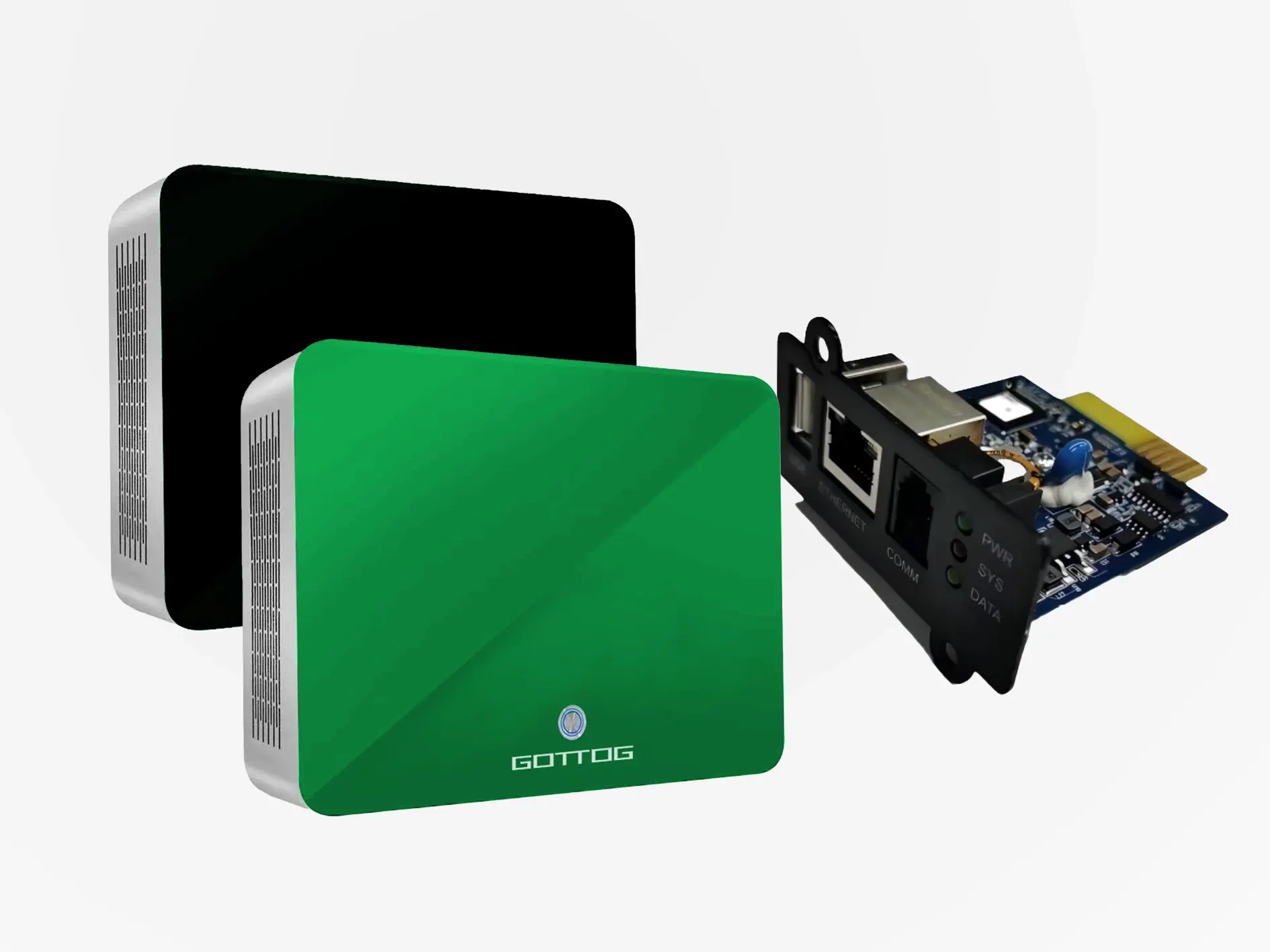
Monitoring platforms that integrate modular UPS, industrial UPS systems, and cooling systems allow operators to track power usage, temperature, and battery status in real time. This enables early warning for potential issues, remote troubleshooting, and rapid response to environmental threats. Centralized control of rack mount UPS, high-frequency modular UPS, and 3-phase UPS systems ensures that each server rack maintains uninterrupted power and proper cooling.
خاتمة
Severe weather is an inevitable challenge for مراكز البيانات, but through modular UPS systems, high-efficiency power designs, and advanced cooling strategies such as liquid-cooled or immersion-cooled server racks, data centers can maintain uptime, protect equipment, and reduce energy waste. Combining rack mount UPS, industrial UPS systems, and modular UPS units ensures redundancy, scalability, and energy efficiency, making your facility more resilient to natural disasters and extreme conditions.
Protect your data center from extreme weather with Gottogpower’s modular UPS, high-efficiency industrial UPS, and advanced cooling solutions. Contact us today to design a resilient power strategy tailored to your facility.